Hank Locksmith NJ Service Team
Local locksmith team
May 25, 2026 11 min read

Your front door is the first line of defense for your home — and if you have a mortise lock, you already have one of the most robust locking mechanisms available. But even the toughest hardware wears down. Homeowners along Route 130 in Florence, NJ often discover a failing lock at the worst possible moment: late at night, in the rain, carrying groceries, or worse — after the door has already swung shut behind them. The good news is that a mortise lock rarely fails without warning. It almost always gives you signals first.
This article walks you through five specific warning signs that your mortise lock needs professional attention now, before a sticky handle becomes a trapped-inside situation. Whether you have a classic Baldwin mortise lock set on an older Colonial, a heavy-duty Corbin Russwin mortise lock on a commercial door, or you're weighing an upgrade to a smart mortise lock, the signs of trouble are the same — and catching them early saves you stress, time, and inconvenience. If any of these sound familiar, Hank Locksmith NJ is available around the clock at (609) 740-0531.
## What Is a Mortise Lock and Why Does It Fail Differently Than Other Locks?
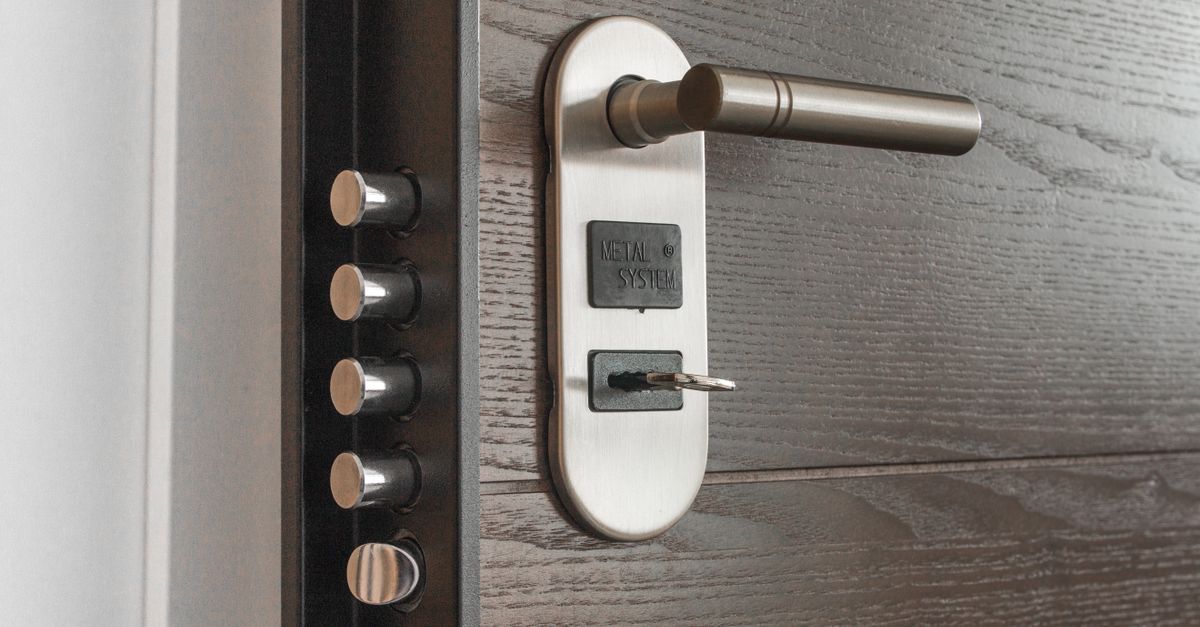
A mortise lock is a multi-component locking mechanism that sits inside a carved-out pocket — the mortise — in the edge of your door, rather than surface-mounting the way a standard knob or deadbolt does. That internal housing contains a latch bolt, a deadbolt, a cylinder, and a case body, all working together. Because so many parts interact in a confined space, wear in one area puts stress on everything else. A door knob lock with a simple spindle fails simply; a mortise lock set fails in layers, often in ways that feel subtle until they aren't.
This architecture is why mortise locks are so strong when maintained, and so frustrating when neglected. Exterior door mortise lock sets in older Florence-area homes — particularly the Victorian and mid-century builds you see near the Historic District — are sometimes original hardware that has gone decades without lubrication or adjustment. That's impressive, but it's also a ticking clock. Modern options like smart mortise locks add electronics to that mechanical complexity, meaning both the cylinder and the circuit board need to stay in good health. Knowing what failure actually looks like is the first step to preventing it.
## Sign 1: The Handle Feels Sticky, Stiff, or Takes Two Hands to Operate
This is the most commonly reported complaint our team hears before a full lockout. A mortise lock handle that used to swing down smoothly and now requires deliberate effort is telling you that internal springs are fatiguing, the cam is worn, or debris and dried lubricant have gummed up the case body. In Florence's humid summers and freeze-thaw winters — conditions that affect every door on every street from Hornberger Avenue to the riverfront neighborhoods — metal contracts and expands constantly, accelerating this kind of wear.
Do not dismiss stiffness as a minor annoyance. A handle that sticks on the way down can also stick in the depressed position, preventing the latch from re-engaging when the door closes. That is how people get locked out without ever touching a key. A qualified locksmith can disassemble the mortise lock case, clean the internals, replace worn springs, and reassemble everything to the manufacturer's specification — restoring smooth operation without replacing the entire mortise lock set. If you are already wrestling with the handle daily, call (609) 740-0531 before the handle stops moving altogether.
## Sign 2: Grinding or Scraping Sounds When You Turn the Key or Handle
Sound is one of the most reliable diagnostic tools in lock service. A healthy mortise lock cylinder turns with quiet, smooth resistance. If you hear grinding when inserting or turning the key, that is metal-on-metal contact happening where it should not be — typically a sign of a worn or cracked cylinder plug, damaged driver pins, or a key that has gradually deformed from daily use and is now cutting into the cylinder walls. Scraping when you move the handle usually points to a misaligned or bent cam dragging against the lock case.
Ignoring grinding sounds accelerates the damage exponentially. What starts as a worn pin can shear a driver entirely, leaving broken metal fragments inside the mortise lock cylinder. At that point, the cylinder cannot be re-keyed — it must be replaced. Experienced locksmiths can often hear the difference between a cylinder that needs a cleaning and one that is days away from catastrophic failure. If your lock sounds like a coffee grinder, that is not normal function — it is a repair call waiting to happen. Our mobile team carries replacement cylinders compatible with most residential and commercial mortise lock sets, so service rarely requires a return visit.
## Sign 3: The Latch or Deadbolt Does Not Seat Fully — and the Hidden Danger Behind It
A latch bolt that does not fully extend into the strike plate, or a deadbolt that requires you to lift or push the door to engage, is one of the most serious security failures a mortise lock can develop — and it is also one of the most commonly misunderstood. Homeowners often assume this is a door alignment problem and ignore it. Sometimes they are right: the door or frame has shifted, and the strike plate simply needs repositioning. But more often, the mortise lock case itself is the culprit. The internal actuator that drives the bolt may be worn, the bolt face may be damaged, or the case body may have cracked from years of force.
Here is the hidden danger: a latch that does not seat fully can be pushed open from outside without any key or tool — sometimes with nothing more than a firm shoulder. This is a genuine security vulnerability, not a hypothetical. A skilled locksmith will assess whether the issue is mechanical (inside the lock case), structural (door frame or hinge sag), or both, and will give you a precise diagnosis before any work begins. For commercial doors — storefronts along Main Street or office buildings near the Burlington County border — an unseated bolt is also a liability issue. Commercial locksmith service for mortise hardware is a core part of what our team handles every day, not an afterthought.
## Sign 4: The Key Is Hard to Remove, Turns Past Its Stop, or No Longer Works Smoothly
Each of these key symptoms points to a different internal problem, but they share the same root: the mortise lock cylinder is compromised. A key that is difficult to remove after unlocking usually means a worn or bent key, a damaged bottom pin, or a cylinder plug that has shifted slightly out of alignment. A key that turns past its intended stop — rotating more than it should before the bolt moves — indicates that the cam inside the cylinder has lost its detent or that the actuator connection has slipped. Both scenarios are a prelude to the key snapping off inside the cylinder, which is among the messiest locksmith service calls to resolve.
Keys that work on some attempts but not others are particularly telling. Intermittent function almost always means the lock is in the early stages of failure rather than already failed, which means there is still time to service it cleanly. Our team services all major mortise lock cylinder formats, including those found in Baldwin mortise lock sets and Corbin Russwin mortise lock hardware common in Burlington County's older institutional and residential buildings. If you are in Florence and the key to your exterior door is starting to feel unpredictable, do not wait for the bad morning when it does not work at all — call (609) 740-0531 and schedule a same-day assessment.
## Sign 5: The Door Has to Be Lifted or Slammed to Lock — Every Single Time
This one is almost universal in older homes, and almost universally dismissed as 'just how the door is.' It is not. When you have to physically lift the door by its handle, lean a shoulder into it, or slam it to get the latch or deadbolt to catch, the door and frame have drifted out of alignment — but the mortise lock set is paying the price. Every forced engagement bends the bolt face slightly more, stresses the case body, and torques the cylinder. Over time, the lock case can crack, the bolt can deform permanently, and the cylinder can seize.
The fix is almost never just the lock. A professional assessment will look at hinge screws (often simply stripped and needing longer fasteners), frame settlement, and weatherstripping compression before touching the lock hardware. In many cases, a combination of hinge adjustment and lock lubrication resolves the problem completely. In more advanced cases — particularly in Florence's older two-story homes that have settled significantly over the decades — a new mortise lock set exterior door installation may be the right long-term answer. Our team can walk you through both the mechanical assessment and the hardware options, and we will confirm an exact price before any work begins. The factors that shape your final quote include the type and brand of lock hardware involved, whether parts need to be sourced, the time of your service call, and the travel distance to your location — all confirmed up front, with no surprises.
## Our Services: What Hank Locksmith NJ Handles Across Florence and the Surrounding Area
We are a fully mobile, insured locksmith team serving Florence, NJ and Burlington County around the clock. Our services include: residential mortise lock repair and replacement, mortise lock cylinder re-keying, mortise lock case cleaning and lubrication, smart mortise lock installation and programming, Baldwin mortise lock set service, Corbin Russwin mortise lock repair, door knob lock installation and repair, deadbolt installation and adjustment, high-security lock upgrades, master key system design, emergency lockout response for homes and businesses, commercial locksmith service for storefronts and office buildings, access control installation, panic bar and exit device service, mailbox lock replacement, garage door lock repair, safe opening and combination changes, padlock removal and replacement, car lockout service, automotive key programming, transponder key cutting, ignition cylinder repair, duplicate key cutting, lock-out prevention assessments, security audits for residential and commercial properties, and strike plate reinforcement and installation. Whether your need is urgent or planned, we show up equipped to handle it in a single visit.
Frequently asked questions
How much does a locksmith cost in NJ for mortise lock repair?+
There is no single flat rate for mortise lock service in New Jersey because several factors shape the final price: the brand and complexity of your lock hardware (a smart mortise lock or a heavy-duty commercial unit involves more labor than a basic residential set), whether parts need to be replaced or only serviced, the time of day your call comes in, and the travel distance to your location. What we commit to at Hank Locksmith NJ is straightforward: we confirm an exact, up-front price before any work begins, so there are no invoice surprises. Call (609) 740-0531 to describe your situation and get a clear quote.
What proof do I need for a locksmith when I'm locked out of my home?+
A professional locksmith is required to verify that you have the right to access the property before performing any service. For a home lockout, you will typically be asked to show a government-issued photo ID with an address matching the property. If your ID shows a different address — for example, if you recently moved to your Florence home — additional documents like a lease agreement, utility bill, or mortgage statement can supplement your ID. Our team handles ownership verification as a standard step on every call, and we do this to protect both you and the integrity of the service we provide. Never be alarmed by a locksmith who asks for this — be concerned about one who does not.
What locks can locksmiths not open?+
A skilled locksmith can open the vast majority of locks encountered in residential and commercial settings, including mortise locks, deadbolts, padlocks, and most automotive locks. The exceptions tend to be heavily damaged locks where the internal components have sheared or corroded to the point where standard service techniques are no longer viable — in those cases, drilling or destruction may be the only option, and the lock will need to be replaced afterward. High-security locks with patented keyways and anti-pick features take longer and require more specialized tools, but are not typically impossible. If you have a specific lock type you are concerned about, call us and describe it — we will give you an honest assessment of what is involved.
How much should an emergency locksmith cost near me in the Florence area?+
Emergency locksmith pricing in the Florence, NJ area follows the same logic as standard service but typically accounts for the urgency of the call, the time of day (overnight and holiday calls involve different logistics), and any specialized parts or hardware needed on the spot. What you should expect from any reputable locksmith — including our team — is a confirmed price before work starts, not a lowball estimate followed by add-on charges at the door. At Hank Locksmith NJ, we answer at all hours and quote honestly. The best way to know your specific cost is to call (609) 740-0531, describe the lock type and situation, and let us give you a real number before we arrive.